

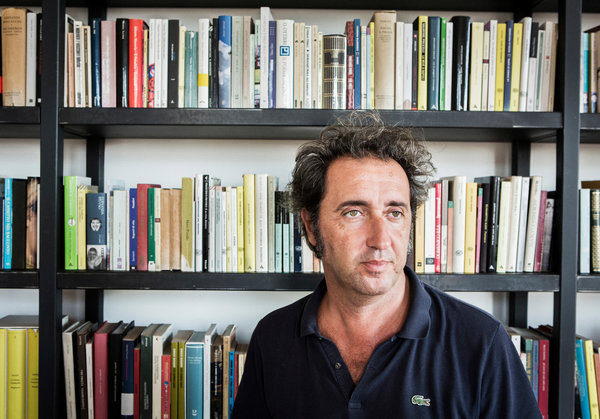

Paolo Sorrentino intervistato dal New York Times, prima della presentazione a Toronto de La grande bellezza.
Rachel Donadio si chiede: “More than any other film to emerge from Italy in recent years, “The Great Beauty” (“La Grande Bellezza”) explores one of the most difficult questions in Italy today: What happened here?
How did this country — that has a natural beauty and a culture that are the envy of the world; that produced Federico Fellini and Anna Magnani; that hurtled from poverty to prosperity in a two-decade postwar economic boom; that has been in the avant-garde of art since neorealism, if not Dante — reach the languorous impasse at which it finds itself now?
Mr. Sorrentino’s film, which has been described as a Technicolor “La Dolce Vita” for the Berlusconi era, doesn’t confront the question directly.”
Risponde Sorrentino: “In Rome today, since it’s hard to be optimistic, it’s hard to be positive, there’s a kind of lassitude that found its symbolic culmination in dancing, in conga lines, in trying to seduce the beautiful woman of the moment or the beautiful man of the moment,” Mr. Sorrentino said, settling into an armchair and puffing on a small cigar. “It seemed that this had become the principal occupation of the country.”
“Obviously, it’s not only like that, There are lots of people who work and do wonderful and commendable things, but there’s still a sense that the nerve centers of the country had fallen asleep on their couches at home. And so I tried to turn that into a film — that everything had become a bit of a salon.”
“The film makes you face questions that might be irritating, There’s a tendency among Italians to say: ‘We’re not part of that,’ ‘I’m not part of that.’ Many people went out of their way to say that they weren’t a part of it, and they were the ones who were most a part of it.”
Alla accuse di chi pensa che il suo stile sia troppo barocco, Sorrentino risponde:
“Considering that cinema is aging, it seems strange to me that it shouldn’t ask questions about style. Films that only have content have already been done, all disciplines need innovation, and innovation comes more readily through form than through substance.”
Nel frattempo, La grande bellezza è uscito nelle sale inglesi con un ottimo riscontro di pubblico: in 27 schermi ha infatti raccolto 117.000 sterline in 72 ore, con una super media per sala di 4.682 sterline, superiore a quanto aveva fatto Il Divo, cinque anni fa.
Non solo il Guardian l’ha applaudito come un capolavoro, ma l’hanno esaltato anche Daily Telegraph, The Independent, Times e Metro.

 Stanze di Cinema
[…] Paolo Sorrentino sul New York Times […]