

Sul New York Times di sabato è uscito un lungo articolo dedicato alla presentazione del nuovo film di Martin Scorsese, che sarà fuori concorso alla Berlinale.
Shutter Island, tratto da un romanzo del 2003 di Dennis Lehane (Mystic River, Gone Baby Gone) è interpretato ancora una volta da Leonardo Di Caprio, con Mark Ruffalo, Ben Kingsley e Max Von Siddow ed è ambientato negli anni ’50 in un’isola vicino a Boston, diventata un ospedale psichiatrico.
Molti film della carriera di Scorsese hanno sullo sfondo gli anni della sua giovinezza, ma qui la struttura a chiave dell’intreccio non ha permesso al regista molte divagazioni:
With scripts like ‘Gangs of New York’ and ‘The Aviator’ there’s a little more flexibility, certain things that can be done to reshape the character, but in scripts like ‘Shutter Island’ there are too many interlocking segments. If you take one piece out, the story starts to fall apart.
With the editing we found that just putting in one reaction shot could throw the scene off completely. The movie’s balance is, like its hero’s, fragile…
Non c’è dubbio che l’ultimo Scorsese si sia accomodato nel ruolo del maestro chiamato a mettere la propria firma su opere pensate e prodotte da altri: i tempi di Taxi driver e Toro scatenato sono passati, così come quelli di Goodfellas, L’età dell’innocenza e Casinò, che hanno rappresentato l’approdo della maturità per uno dei più straordinari registi della sua generazione.
Oggi prevalgono altre esigenze: la collaborazione con Leonardo Di Caprio, i grossi budget e gli incassi sempre più sostanziosi, il meritatissimo ed altrettanto atteso premio oscar.
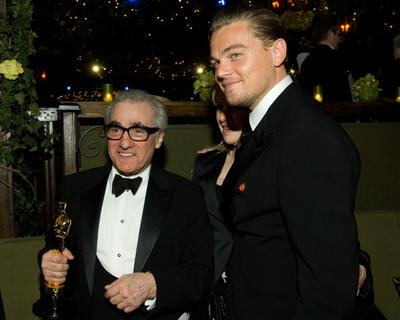
Eppure anche in queste opere su commissione, che nulla hanno a che fare con la visionarietà de L’Ultima tentazione o lo spirito feroce di Re per una notte, Scorsese ha mantenuto una certa vivacità:
Some filmmakers as they grow older begin to pare down their styles, to produce mellow, autumnal works that attempt to express with serene simplicity the accrued wisdom of their lives. Does that sound like Martin Scorsese? His movies have always been fueled by nervous energy and huge uprushes of adrenaline, and it’s nearly impossible to imagine him doing without some kind of emotional turbulence, even if he has to induce it by sheer force of will.
Come sempre il film è stato l’occasione per mostrare ai suoi collaboratori alcuni classici del passato, dai quali prendere ispirazione:
He always shows classic films to his cast and crew. “We saw ‘Laura,’ ‘Out of the Past’ and of course ‘Vertigo,’ ” Mr. DiCaprio said, “all these movies about obsessed detectives coming to terms with themselves through their investigations.” He added: “He wanted a genre feel to the film, and wanted it to be specific to this particular era. It’s almost like he’s accessing his dreams or something, the dreams being all those movies. They’re like memories coming back to him.”
He also inevitably needs to speak of remembered films like those of Jacques Tourneur, who made the doomy, complex noir “Out of the Past” (1947). “I like watching ‘Out of the Past’ repeatedly,” he said, “because I never know quite where I am in it, I don’t know what’s the beginning, the middle or the end. I screened it for Leo and the other actors just to show that sense of a character not knowing where he is at a given point in time and trying to figure it out from scene to scene.” (He confided, “I didn’t think it was going over at all, but at the end Leo applauded and said to me, ‘That’s the coolest movie I ever saw.’ ”)

 Stanze di Cinema