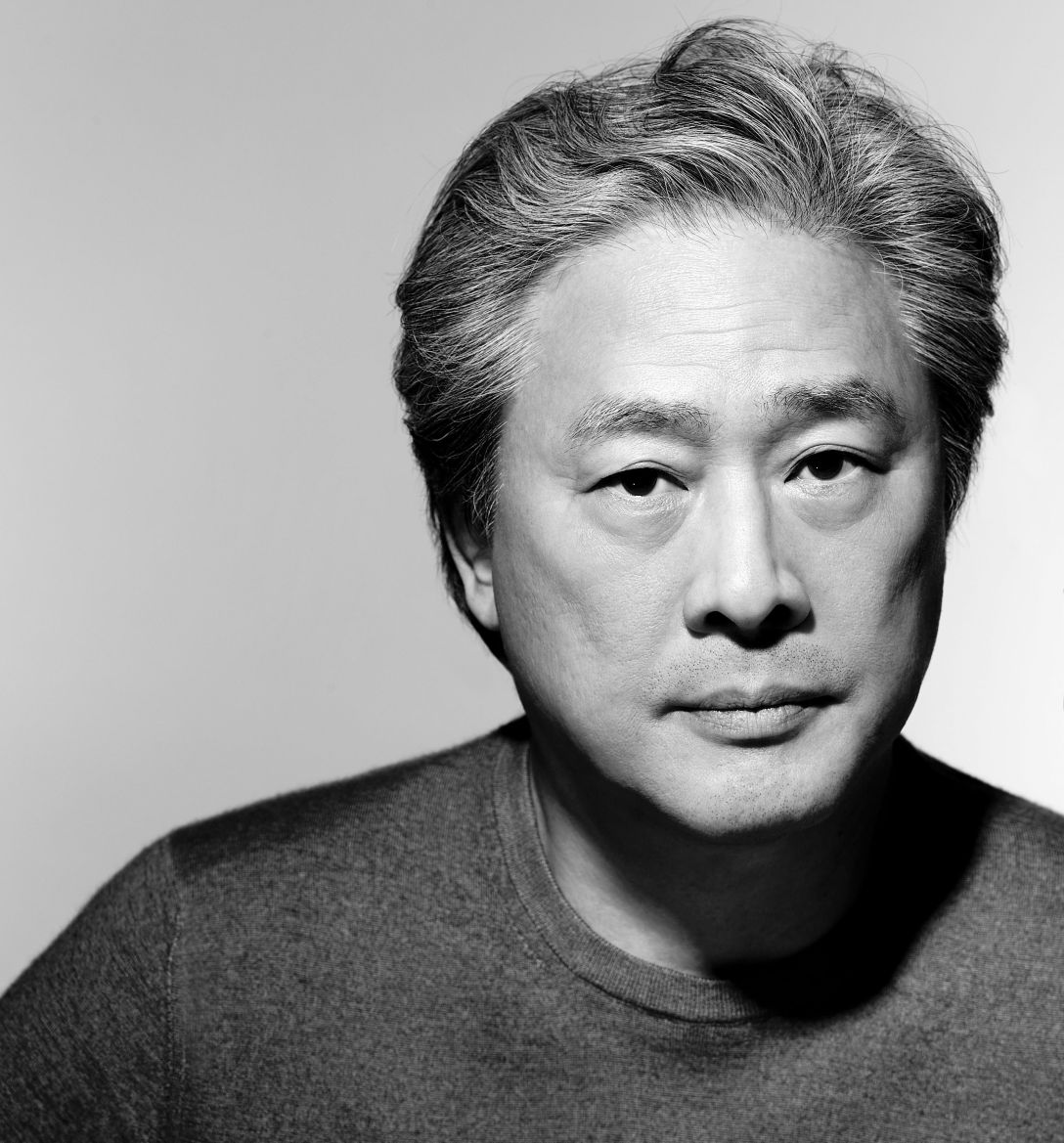
Sarà il coreano Park Chan-wook, il presidente della giuria di Cannes 79, in programma dal 12 al 23 maggio prossimo.
Park ha visto la sua carriera svoltare drasticamente proprio sulla Croisette quando Quentin Tarantino ha assegnato al suo Oldboy il Grand Prix della giuria nel 2003.
Altri tre film sono poi stati ospitati dal Festival di Cannes, Thirst, The Handmaiden e Decision To Leave.
Mentre l’ultimo No Other Choice assieme a Lady Vendetta hanno aperto a Venezia.
JSA – Joint Security Area del 2000 resta uno dei film chiave della new Wave coreana e uno dei campioni d’incasso di quella ondata.
Questo il comunicato stampa ufficiale:
Visceral, subversive and baroque, Park Chan-wook’s films are bold in every way – in script, in style and in morality. Yet the virtuoso director never strays from a symbolic social message or from his audience, whom he immerses in dark, disturbing worlds on journeys that are sometimes terrifying, sometimes exhilarating, sometimes erotic… or all of these together.
“Park Chan-wook’s inventiveness, visual mastery, and penchant for capturing the multiple impulses of women and men with strange destinies have given contemporary cinema some truly memorable moments,” said Festival President Iris Knobloch and Director Thierry Frémaux. “We are delighted to celebrate his immense talent and, more broadly, the cinema of a country deeply engaged with the questioning of our time.”
For Park Chan-wook, it all began in Cannes with Old Boy, which won the Grand Prix in 2004. Since then, almost all of his films selected for the Competition have earned him awards: Thirst (Jury Prize 2009), The Handmaiden (2016) and Decision to Leave (Best Director 2022). So many films with extraordinary heroines… His presence at the Palais des Festivals testifies to the mutual loyalty that exists between Park Chan-wook and the Festival de Cannes.
He is often compared to film-makers such as Tarantino, De Palma, and Fincher for artistry in composing images whose formal beauty is matched only by their moral rigor. He also cites Kurosawa, Bergman, Visconti, and Hitchcock as models.
Though he developed a passion for cinema at a very young age and had a brief career as a critic, Park Chan-wook dreamed of becoming a film director after discovering Vertigo by Alfred Hitchcock. The English master has permeated his work, down to the composition of certain shots and sets, with a sense of aesthetics tinged with surrealism. Park Chan-wook drew freely on Shadow of a Doubt for his family drama Stoker (2013), his American escapade starring Nicole Kidman and Mia Wasikowska. And Hitchcock’s influence is once again strikingly evident in his Decision to Leave, a seductive and vertiginous thriller in which obsession is taken to the extreme.
Obsession is a recurring theme in all his films, right up to his latest, No Other Choice (2025). This jubilant satire with its macabre humor lampoons the deadly quest for success that consumes Korean capitalist society, as well as male vanity, which was already fiercely exposed in his feminist and queer film The Handmaiden. Revenge is also the blood-red thread running through Park Chan-wook’s deeply pictorial filmography. It is the subject of a trilogy that began in 2002 with Sympathy for Mister Vengeance, continued in 2004 with Old Boy, which established him on the international scene, and that was completed in 2005 with Lady Vengeance. In this cinema of excess, treasure hunts and massacres alternate between unease and comedy, heartbreak and the grotesque in an art of crazed but perfectly mastered contrast. The plunge into the depths of a human soul torn between the impulses of love and death remains nonetheless harrowing…
The work of Park Chan-wook – whose third film, JSA (Joint Security Area), broke the national box office record in 2000 – embodies the DNA of contemporary Korean cinema in every way: free from conventions, audience-oriented, ambitious, deliberately provocative, and sophisticated without being intellectualized.
Park Chan-wook’s presidency symbolizes the Festival’s early and deep attachment to Korean cinema, whose creativity has been revealed by the Official Selection. Korea is a great film-making country whose treasures are being restored year after year; it has shown that it can produce major contemporary works that attract millions of theatergoers in a space that celebrates its film-makers.
At the turn of the new millennium, a new generation swept onto the Croisette, led by veteran Im Kwon-taek, Cannes’ first Korean winner with the 2002 Best Director award for Chi-hwa-seon (Strokes of Fire). Often selected for Un Certain Regard, the new generation has established a lasting presence in Competition (Hong Sang-soo, Tale of Cinema, 2005; Kim Ki-duk, Breath, 2007; Lee Chang-dong, Poetry, Best Screenplay 2010) and in the Midnight Screenings (Kim Jee-woon, A Bittersweet Life, 2005; Yeon Sang-ho, Train to Busan, 2016; Byun Sung-hyun, The Merciless, 2017; Lee Won-tae, The Gangster, the Cop, the Devil, 2019).
As the crowning glory of this wave, Bong Joon-ho won the first Korean Palme d’Or, awarded by the jury chaired by Alejandro González Iñárritu in 2019.
Finally, while Korean directors are regularly honored by the Festival de Cannes, their actors are equally celebrated, both on juries and in the awards, as evidenced by Jeon Do-yeon (Best Actress, Secret Sunshine, 2007) and Song Kang-ho (Best Actor, Broker, 2022). The latter has appeared in four films directed by Park Chan-wook.
A few months before the 79th Festival, future President Park Chan-wook confided: “The theater is dark so that we may see the light of cinema. We confine ourselves within the theater so that our souls may be liberated through the window of film. To be enclosed in a theater to watch films, and enclosed again to engage in debate with the members of the Jury, this double, voluntary confinement is something I await with great anticipation. In this age of mutual hatred and division, I believe that the simple act of gathering in a theater to watch a single film together, our breaths and heartbeats aligning, is itself a moving and universal expression of solidarity.”

 Stanze di Cinema