

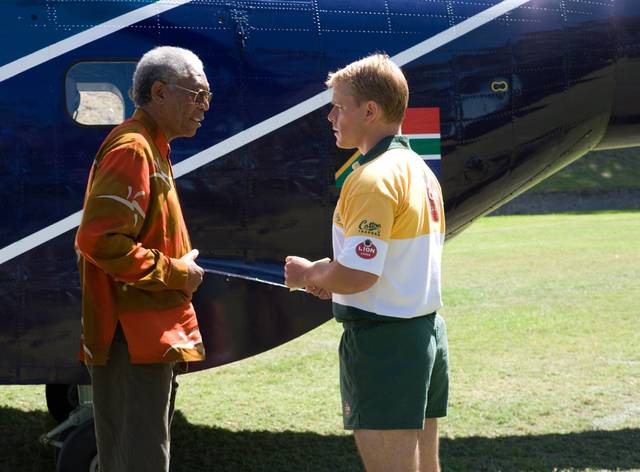
Il nuovo film di Clint Eastwood, che debutterà negli Stati Uniti questo weekend, ha ricevuto un’ottima accoglienza, in particolar modo dal New York Times.
A.O.Scott va al cuore del film e della poetica eastwoodiana della vendetta.
It may not seem obvious at first, but Clint Eastwood’s “Invictus,” a rousing true story of athletic triumph, is also that director’s latest exploration of revenge, the defining theme of his career. It is hard to think of an actor or a filmmaker who so cleanly embodies a single human impulse in the way that Mr. Eastwood personifies the urge to get even.
“Invictus” is to some degree an exception, a movie about reconciliation and forgiveness — about the opposite of revenge — that gains moral authority precisely because the possibility of bloodshed casts its shadow everywhere.
Scott intravvede nelle difficoltà di Mandela di riunire il suo popolo, diviso dall’apartheid, un parallelo con l’America di oggi:
He has shown that he can win an election, it says, but will he show that he can govern?
“It’s a fair question” …And a perennially urgent one in any democracy. Mr. Eastwood and the screenwriter, Anthony Peckham, are too absorbed in the details of the story at hand to suggest historical analogies, but “Invictus” has implications beyond its immediate time and place that are hard to miss.
La sfida di raccontare una delle figure più grandi del secolo breve e la forza della sua leadership, attraverso le maglie di un film sportivo, sembra perfettamente riuscita.
The convergence of the two provides an occasion for some potent, intelligent filmmaking — a movie that hits you squarely with its visceral impact and stays in your mind for a long time after.
Kenneth Turan sul Los Angeles Times è colpito dalla consueta maestria narrativa del regista californiano:
Eastwood, who will be 80 next year, understands the flow of narrative in a way younger directors might envy. Working here with co-stars Morgan Freeman and Matt Damon, he doesn’t allow anything, especially not splashy technique, to get in the way of simply telling a story. Over the last several years, he’s become as much of a brand name as Pixar when it comes to audience satisfaction that you can count on. The story he tells, based on a script by Anthony Peckham, is far from the ordinary great-man tale.
“Invictus” is named after a poem by William Ernest Henley, a particular favorite of Mandela, who was especially inspired by its last two lines: “I am the master of my fate: I am the captain of my soul.” This popular Victorian-era work is not on the top of school reading lists anymore, but it just might be the latest old-fashioned form that Eastwood’s skill brings back to life.

 Stanze di Cinema